


Clans of London: Vampire CCG
4.5493.00 Reviews
App Specs
- Version
- 1.5.2
- Updated On
- License
- Free
- Downloads
- 100,000+
- Developer
- Well Played Games Ltd
- Categories
- Card
- Platform
- Android
Screenshots



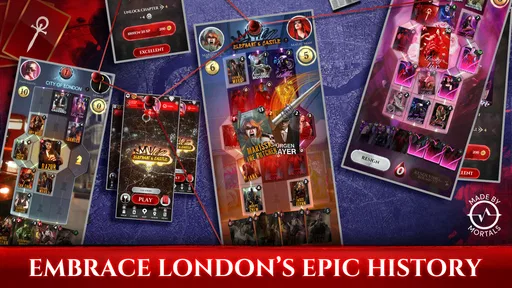

 Analysis by AppCompare
I went into Clans of London: Vampire CCG expecting a quick card game, and that is exactly where its appeal sits: it is built around short competitive matches rather than long sessions that demand a full evening. The vampire setting gives the battles a darker identity, while the card-game format keeps the basic idea easy to understand. You choose your cards, read the opponent, and try to make better decisions before the duel is over.
That concise format makes it an interesting fit for people who enjoy competitive card games but do not always have time for a lengthy match. I can imagine opening it during a commute, between errands, or when I want a focused game rather than an endless stream of content. At the same time, the mature presentation and competitive pressure mean it is not a universal recommendation. Players looking for a relaxed solitaire card game, a deep role-playing campaign, or a family-friendly experience should look elsewhere.
How the current version feels to play
Clans of London is a free card game from Well Played Games Ltd, presented as a fast PvP experience with vampire-themed battles. Its store summary points directly to the central rhythm: matches are designed to take about five minutes. That changes how I approach every decision. I am not building toward a distant late-game plan in a long session; I am constantly weighing whether a move is worth making immediately or whether saving a resource for the next exchange will create a better opening.
The short format is more than a convenience. It gives each mistake a clear cost. In a slower card game, a poor early decision can sometimes be repaired through several later turns. Here, the limited match window makes momentum matter much more. I found that the best mindset is to treat every turn as part of a compact sequence: identify the immediate threat, decide what can safely wait, and avoid spending valuable cards simply because they are available.
That also makes the game suitable for players who like learning through repetition. A match can end quickly enough that I can think about what went wrong and try a different approach soon afterward. This is more useful than it sounds. Short games make experimentation less intimidating, especially when I am still learning how the cards interact or trying to understand which decisions consistently lead to trouble.
The other side of that design is that a quick match can feel unforgiving. There is less room for a slow recovery, and a player who dislikes losing several brief contests in a row may find the pace stressful rather than exciting. The game rewards attention even when the session is short. It is not the kind of app I would open while distracted by another task and expect to play well.
The vampire theme gives the card battles their identity
The setting is important because it separates this game from ordinary digital card tables. The London vampire premise creates a more mature atmosphere than a bright fantasy battler, and that tone is reflected in the age classification of Mature 17+. I would keep that in mind before installing it on a shared family device or recommending it to a younger player.
Worth Reading Before You Choose

EA SPORTS FC Mobile 26 Is a Bigger Football Game, but It Takes Time

Flipboard Shows What News Apps Must Do Beyond the Feed

Switching to Android Auto Means Rethinking Your Driving Routine

Google Calendar Makes a Crowded Week Easier to Manage

Ludo King Makes the Most of the Minutes Between Plans

Baby Panda World Brings Quick Play to Modern Phones, but Its Game Library Feels Busy
Still, the theme is not a substitute for good decisions. A dark setting may attract someone to the download, but the lasting appeal depends on whether the card play feels satisfying. In my view, the strongest reason to stay is the compact PvP loop: the theme catches the eye, while the rapid contests provide the reason to return.
Players who enjoy vampire fiction but do not normally play card games may find the short matches a gentle entry point. Conversely, experienced card-game players should not assume that the setting alone makes it a full-scale strategy epic. Its appeal is more focused: quick confrontations, readable goals, and the tension of trying to outthink another person within a small amount of time.
What the version and release history tell me
The game was released on November 19, 2025, and the current version is 1.5.1. That places the review in an early stage of the product’s life rather than after years of accumulated content. I see that as useful context when deciding whether to commit heavily to it. A relatively young competitive game can feel fresh and easier to follow, but it may also still be refining its balance, presentation, and long-term structure.
I would not treat the version number as proof that every rough edge has disappeared. It does show that the game has already moved beyond its first release, which is encouraging, but the practical question is how well the current build fits a player’s habits. Someone who wants a stable, mature card ecosystem with a huge established community may prefer a longer-running alternative. Someone who enjoys joining a newer game and learning its direction as it develops may be more comfortable here.
The minimum operating-system requirement is Android 7.0, so the technical barrier is not especially demanding for many Android users. That does not guarantee identical performance on every phone, of course, and card games can still feel unpleasant if menus lag, animations interrupt decisions, or a connection becomes unreliable during a duel. I would test it on the device I intend to use before investing money or treating it as my main competitive game.
How existing users may experience the current build
For someone already playing, the move to version 1.5.1 is best understood as a current checkpoint rather than a promise about the future. Existing users should judge it by practical questions: do matches start smoothly, can they understand why a turn succeeded or failed, and does the short format still feel varied after repeated sessions? Those are more meaningful tests than simply seeing a newer number on the download screen.
New players also benefit from approaching the game as a learning process instead of immediately chasing perfect results. I would begin by paying attention to the timing of decisions rather than trying to memorize everything at once. After each loss, I would ask whether I committed too early, ignored the opponent’s likely response, or used a card for a small advantage that left no answer for the next exchange.
One useful habit is to separate a “testing” session from a “winning” session. During testing, I would deliberately try a different approach and observe what it changes, even if the result is not immediately successful. During a winning session, I would return to the choices that feel reliable. This prevents every loss from feeling like wasted time and helps reveal whether the problem is a bad decision, unfamiliarity with the game, or simply an opponent who read the situation better.
Because the matches are short, I would also set a stopping point before beginning. This is a small but practical tip: quick games can encourage one more attempt after every loss, and that can turn a convenient five-minute activity into a frustrating cycle. The format works best when I use its brevity intentionally rather than letting it dictate an endless series of rematches.
Free to start, but spending deserves attention
Clans of London is free to download and play, with optional purchases ranging from $1.99 to $99.99 per item. That wide range makes it important to decide in advance how I want to use the game. I would first play long enough to learn whether the core PvP loop genuinely holds my attention. Paying before understanding the game’s rhythm is a poor choice, especially for a competitive title where excitement after a loss can make an impulse purchase feel tempting.
The free entry point is helpful because it lowers the risk of trying the game. The trade-off is that players who become invested may feel pressure to spend in order to progress, customize, or compete more comfortably, depending on how the available purchases fit into their experience. I would keep a firm budget and avoid treating a purchase as a way to recover from a losing streak. In a game built around player-versus-player decisions, spending cannot replace learning how to read a match.
This is also where the game may differ from a traditional physical card game. A physical collection has an obvious ownership model, while a free mobile card game asks the player to evaluate ongoing convenience and optional spending. That model suits people who want to sample the experience without paying upfront. It is less attractive to anyone who prefers a single purchase with a clearly defined amount of content.
Where it compares well with other card games
Compared with long-form digital collectible card games, Clans of London has a clear advantage for time management. I do not need to reserve a large block of time to see a match through. The vampire theme also gives it a stronger personality than a generic card battler, which matters when I am deciding which game deserves space on my phone.
Compared with casual solitaire apps, however, it demands much more concentration because another player is actively responding to me. There is no equivalent comfort in repeating a familiar puzzle at my own pace. If I want a quiet game before bed, a solo card app may be a better fit. If I want a compact contest where my choices are tested immediately, this one is more compelling.
It also differs from board-game adaptations. Those often recreate a tabletop system with longer turns, more physical-style components, or a campaign structure. Clans of London instead emphasizes the immediacy of a duel. That makes it easier to pick up for a short break, but it may feel less rewarding to players who enjoy elaborate setup, long-term world building, or a social table atmosphere.
Practical situations where it makes sense
One realistic use case is a short break during a busy day. I could play a match while waiting for an appointment, then close the game without feeling that I abandoned a lengthy campaign. The important condition is having a reliable enough connection and enough attention to make decisions. It is convenient, but not mindless.
Another use case is deliberate practice. Rather than playing only when bored, I could choose a small goal for a session, such as improving defensive timing or learning to recognize when an apparently strong move creates a bad follow-up. This approach gives the brief matches more value and helps prevent the game from becoming a sequence of disconnected wins and losses.
It can also work for friends who like comparing decisions after a match. The PvP structure naturally creates conversation: why did one player commit, why did the other hold back, and which turn changed the direction of the duel? That makes it more engaging than a purely passive mobile distraction, even though the matches themselves are compact.
Remaining friction and who should skip it
The biggest limitation is the same feature that makes the game attractive: brevity. A short match leaves little space for a slow strategic build, and players who want every card to contribute to a large evolving plan may find the experience too compressed. I would skip it if my favorite part of card games is creating elaborate engines over a long session.
The competitive format is another boundary. A player who dislikes losing to an opponent’s better read may not enjoy the game, even if the vampire theme is appealing. There is a difference between wanting a card game and wanting a PvP card game. That distinction is easy to miss when the store summary emphasizes the setting first.
The mature age classification should also influence the decision. I would not recommend it as a general children’s game, and I would check the device and account settings before allowing a younger family member to access it. The free price makes trying it easy, but the in-app purchase range means adults should still supervise spending on shared devices.
Finally, the early stage of the release matters. The current version may be perfectly enjoyable, but players who demand a deeply established competitive environment should approach with measured expectations. I would choose a more mature alternative if I needed a long-proven metagame, extensive historical balance, or a community ecosystem that has already settled into place.
What I would watch before committing
I would watch how the game develops from version 1.5.1 onward, especially in areas that affect repeated play: variety between matches, clarity of card interactions, fairness in competitive encounters, and whether the short format continues to feel meaningful after the novelty fades. Those are the signs that will show whether it can become a regular game rather than a brief curiosity.
I would also pay attention to how comfortable the free experience remains over time. Optional purchases are not automatically a problem, but the balance between trying the game freely and feeling pushed toward spending determines whether the product feels welcoming. For me, the best outcome would be a game where improvement comes primarily from understanding decisions, with purchases remaining a choice rather than an emotional response to defeat.
My recommendation is therefore fairly specific: try it if you want fast vampire-themed PvP card battles, enjoy learning through repeated short matches, and are comfortable setting limits around optional purchases. I would not choose it for a family-friendly card table, a solo relaxation app, or a sprawling campaign experience.
With an average rating of 4.5 from around 4.7 thousand ratings and more than 100 thousand installs, it has already attracted meaningful early attention. Those figures are encouraging, but my own decision would still come down to the match format and tone. The game’s strongest quality is its ability to turn a small pocket of free time into a focused duel. If that sounds like the kind of tension I want, the free entry point makes it worth exploring; if I want slower, calmer, or more established card play, another option will serve me better.
Pros
- Strategic card battles reward careful deck-building and timing.
- Distinct vampire clans offer varied playstyles and replay value.
- Matches are well suited to short mobile gaming sessions.
- Dark London setting gives the game a memorable atmosphere.
- Collecting cards provides clear long-term goals for dedicated players.
Cons
- New players may find the rules and card interactions difficult at first.
- Progress can feel slow without regular play or resource management.
- Matchmaking may be challenging when facing experienced deck builders.
- The gothic theme and complex systems may not appeal to casual players.
- Card balance and the available meta can influence competitive variety.
FAQs for Clans of London: Vampire CCG
What is Clans of London: Vampire CCG about?
Clans of London: Vampire CCG is a collectible card game set in a dark urban vampire world. You build a deck around different vampire clans, combine character and ability cards, and compete using strategy rather than simple luck. Each clan has its own identity, strengths, and play style, so experimenting with card combinations is an important part of learning the game.
Is Clans of London: Vampire CCG free to download and play?
The game can be downloaded without an upfront purchase, but players should check the current store listing for details about optional in-app purchases. As with many collectible card games, purchases may provide additional cards, resources, or progression options. You can usually begin learning the mechanics for free, although building a highly competitive collection may require patience or spending.
Does the game require an internet connection?
An internet connection is generally important for the main features of Clans of London: Vampire CCG, particularly account access, card collection management, updates, and online matches. Players should not assume that the complete experience is available offline. A stable connection is recommended during battles, since interruptions may affect matchmaking, synchronization, or the recording of your results.
Is Clans of London: Vampire CCG suitable for beginners?
The game is accessible to players who are new to card games, but it may take time to understand the interaction between clans, card abilities, resources, and deck construction. Early matches are useful for learning the basics, while more advanced play requires careful planning. New players should expect some experimentation before finding a deck and strategy that feel comfortable.
What devices are compatible with Clans of London: Vampire CCG?
Compatibility depends on the version available for your device and the operating system requirements shown on the official Google Play or App Store page. Before downloading, check the listed Android or iOS version, available storage, and any device restrictions. Keeping your operating system and the game updated can also help prevent performance, login, or connection problems.


